
Garlic
Introduction
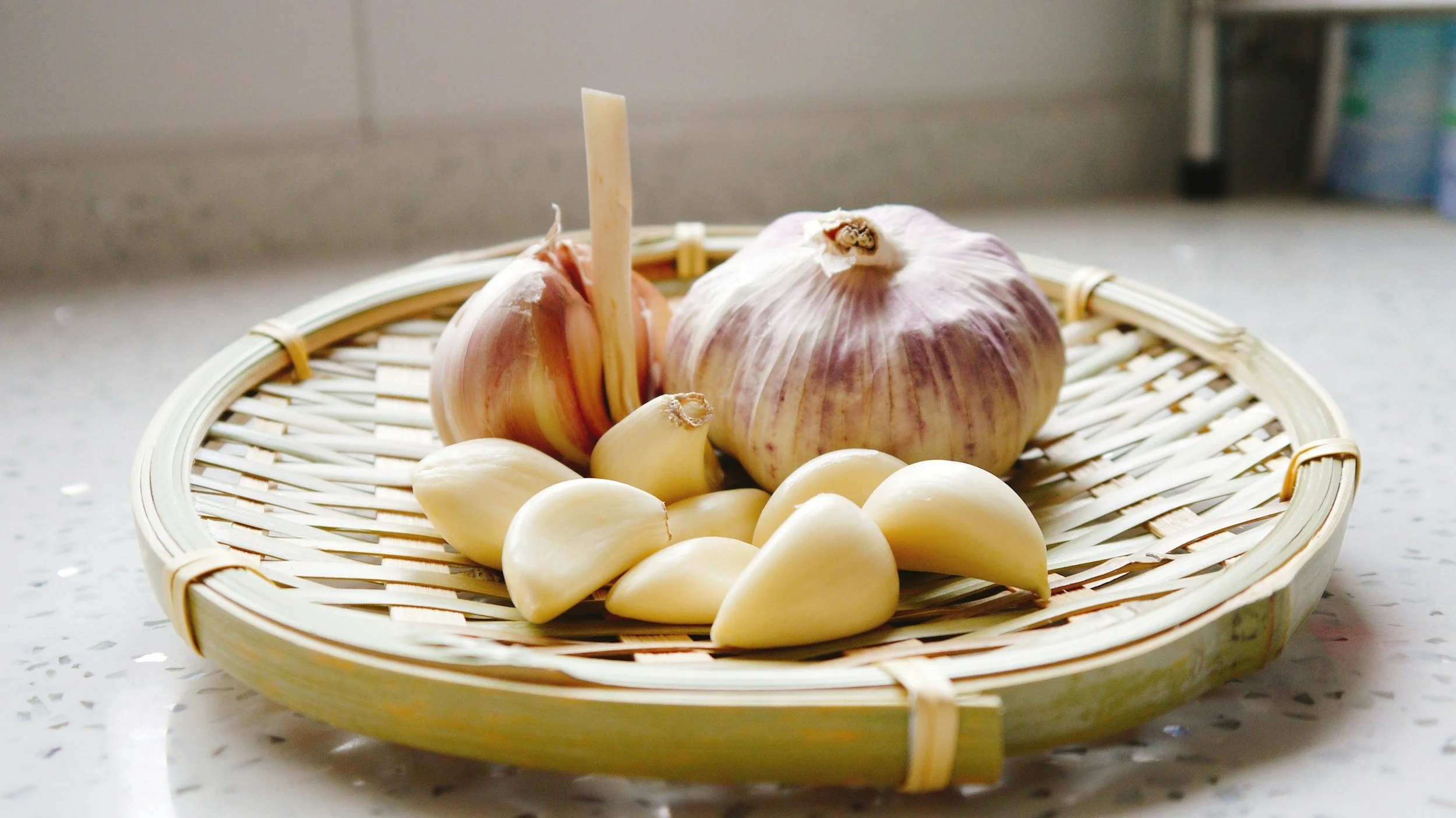
Garlic is a bulbous member of the Allium family (Allium sativum), a plant rather than a fruit or animal, composed of a central stem surrounded by individual cloves encased in papery skin. It can be eaten raw or cooked — raw garlic delivers a much sharper, more pungent flavour and stronger sulphur-containing compounds, while cooking mellows its intensity and develops sweeter, nutty notes.
Typical bulbs are off-white to pale cream, sometimes with pinkish or purple streaks depending on variety; the colour reflects the thin protective skins and natural pigments, while the cloves themselves are creamy-white due to storage carbohydrates and low pigment concentration.
Notable nutrients in garlic include small amounts of carbohydrate (largely fibre and simple sugars), negligible fat and protein, and micronutrients such as vitamin C, vitamin B6, manganese and selenium; it also contains organosulfur compounds (notably allicin) and flavonoids associated with antioxidant and potential cardiovascular effects.
Nutrition Snapshot per 100g
Kcal nn kcal
Protein nn g | nn %
Fat nn g | nn %
Carbohydrates nn g | nn %
Percentages reflect this food’s Balance*
Fibre nn g
Total Sugars nn g
Saturated Fat nn g
Salt nn mg
Nutritional values are per 100g and sourced from UK CoFID data.
Carbohydrates value includes Fibre (AOAC method).
Carbohydrates value includes Total Sugars including naturally occurring sugars such as glucose, fructose, lactose or sucrose.
Balance*
The Balance value expresses how protein, carbohydrate and fat contribute to a food’s total energy.
Using CoFID data per 100g, each macronutrient is converted into energy using the standard Atwater convention (protein × 4 kcal, carbohydrate × 4 kcal, fat × 9 kcal). The energy from each macronutrient is then calculated as a percentage of the total macro energy.
This provides a simple way to see whether a food is predominantly carbohydrate-based, protein-based or fat-based.
It does not determine whether a food is “good” or “bad”, but helps visualise its macronutrient profile within a broader eating pattern.
When assessing a full meal or daily intake, portion sizes should be taken into account.
Why this matters
Understanding the structure of individual foods can help you make more confident decisions when adjusting to a health diagnosis or long-term condition.
If you are organising meals, tracking intake or reflecting on patterns, you may find the Aardelia digital journals helpful.